US-1 roadside assistance in Port St. Lucie, FL
US-1 runs right through Port St. Lucie, passing about 5 miles from the middle of town. That makes US-1 one of the roads Port St. Lucie drivers count on for trips to Clover Park, the Mets spring training ballpark and beyond, and it is why MVP Mobile Tire Shop and Roadside Assistance keeps US-1 roadside assistance in Port St. Lucie available day and night.
Port St. Lucie is the biggest city on the Treasure Coast, laid out by the General Development Corporation as a grid of home lots and now spreading west into Tradition and the planned communities beyond Florida's Turnpike, with New York Mets spring training at Clover Park. Port St. Lucie is the main city of the Treasure Coast service area, so US-1 here carries some of the heaviest traffic we cover.
Dispatch finds you faster with local detail. Port St. Lucie covers more than a hundred square miles, from the US-1 side along the North Fork of the St. Lucie River west past I-95 to St. Lucie West, Tradition and the new neighborhoods near Florida's Turnpike, and street names repeat as SW, SE and NW versions, so give the full street name with its prefix and the nearest main road, such as Port St. Lucie Boulevard, Gatlin Boulevard, St. Lucie West Boulevard, Becker Road or the Crosstown Parkway. On US-1, add your direction of travel and the nearest crossroad, mile marker or exit.
Finding your spot on US-1 near Port St. Lucie
Through and around Port St. Lucie, US-1 is a surface highway rather than a freeway, so there are no numbered exits to read off. Name the nearest cross street, business or landmark, such as Clover Park, the Mets spring training ballpark or Tradition Square, and say whether you were northbound or southbound on US-1.
Around Port St. Lucie, stretches of US-1 pass Indian River Lagoon shoreline, bridge approaches, marinas, mangroves and rows of look alike shopping plazas, so it is easy to lose track of where you are. The small green mile marker posts on the shoulder, or a pin dropped from your phone, put the technician at the right spot even when the last landmark you remember is the Port St. Lucie Botanical Gardens.
The distances on this page come from U.S. Census place data and OpenStreetMap road lines: the nearest stretch of US-1 is about 5 miles from the middle of Port St. Lucie. Road signs always win, so if a sign on US-1 near the Crosstown Parkway bridge over the North Fork reads differently, read it to dispatch exactly as it appears.
Where US-1 runs past Port St. Lucie
In Miami-Dade, US-1 follows Biscayne Boulevard north of downtown and South Dixie Highway south through Coral Gables, Pinecrest and Cutler Bay to Homestead, in Palm Beach County it follows Federal Highway along the coast, and in Jacksonville it runs as Philips Highway from the St. Johns County line past Bartram Park and the Southside into downtown, then north as New Kings Road. Between St. Augustine and the Space Coast, US-1 runs through St. Augustine, past St. Augustine South and St. Augustine Shores, through Bunnell and Palm Coast in Flagler County and down the Volusia mainland through Ormond Beach, Holly Hill, Daytona Beach, South Daytona, Port Orange, New Smyrna Beach, Edgewater and Oak Hill. On the Space Coast, US-1 follows the west shore of the Indian River through Scottsmoor, Mims, Titusville, Port St. John, Sharpes, Cocoa, Rockledge, Palm Shores, Melbourne, Palm Bay, Malabar, Grant-Valkaria and Micco. Through the Treasure Coast, US-1 follows the Indian River Lagoon through Roseland, Sebastian, Wabasso, Winter Beach, Gifford, Vero Beach and Florida Ridge, then St. Lucie Village, Fort Pierce North, Fort Pierce, River Park and the east side of Port St. Lucie, crosses the St. Lucie River on the Roosevelt Bridge past North River Shores into Stuart and runs south through Port Salerno and Hobe Sound. In the Florida Keys, US-1 becomes the Overseas Highway: it leaves Florida City on the 18 Mile Stretch, crosses Jewfish Creek onto Key Largo and runs past North Key Largo's CR 905 turnoff through Key Largo and Tavernier, across the Snake Creek drawbridge through Islamorada, past Layton on Long Key and the Duck Key turnoff into Marathon and Key Colony Beach, over the Seven Mile Bridge to the Lower Keys at Big Pine Key, Cudjoe Key and Big Coppitt Key, and across Stock Island to mile marker 0 in Key West. Near Port St. Lucie, US-1 runs right through Port St. Lucie, passing about 5 miles from the middle of town, and Tradition Square is a good landmark to name when you call from this part of US-1.
It parallels the Metrorail and the South Dade busway in the south and links coastal downtowns such as Lake Worth Beach, Boynton Beach and Delray Beach in Palm Beach County, while in Jacksonville it parallels I-95 on the Southside and crosses I-295 near Bartram Park. Around Port St. Lucie, US-1 also ties into I-95, Florida's Turnpike and Port St. Lucie Boulevard, the roads that lead to Clover Park, the Mets spring training ballpark.
Other towns we cover along US-1 near Port St. Lucie include River Park (5 miles northeast), White City (7 miles northeast), Indian River Estates (8 miles northeast), North River Shores (8 miles southeast), Fort Pierce South (9 miles north) and Jensen Beach (9 miles east). One dispatch line covers every one of them, so if you break down between Port St. Lucie and River Park, give the last landmark you passed, the Port St. Lucie Botanical Gardens or a mile marker, and we work out the rest.
US-1 and the roads of St. Lucie County
St. Lucie County is the middle of the Treasure Coast, with Port St. Lucie, the largest city in the region, historic Fort Pierce and its inlet and port, the Hutchinson Island beaches and citrus and cattle land to the west, with Fort Pierce as the county seat. I-95 and Florida's Turnpike run north and south through the county and meet SR 70 at Fort Pierce, US-1 follows the lagoon, SR A1A crosses to Hutchinson Island on the Fort Pierce causeways, and Port St. Lucie Boulevard, the Crosstown Parkway and Gatlin Boulevard carry Port St. Lucie traffic. US-1 near Port St. Lucie is part of that network, and our technicians use it to reach Clover Park, the Mets spring training ballpark and the rest of town.
Before you call from US-1, know this about the county: fast growth in western Port St. Lucie keeps new roads, construction zones and crowded interchanges changing from month to month. Closer to Port St. Lucie, Port St. Lucie Boulevard and Gatlin Boulevard carry heavy commuter traffic through long rows of signals and plaza entrances, and the older residential streets run beside deep drainage canals with no shoulder.
What goes wrong on US-1 near Port St. Lucie
These are the problems our technicians prepare for on US-1 around Port St. Lucie, not a promise about any one call. It is a signalized surface road with frequent stops, pedestrians and turning traffic rather than a freeway. Near Port St. Lucie, the traffic mix is commuter cars headed to jobs in Palm Beach County, family SUVs, builders' trucks and landscape trailers on new home sites and delivery vans, and each brings its own tire trouble to US-1.
Heat: Summers on the Treasure Coast are hot and humid, with thunderstorms building over the groves and pastures inland most afternoons from June into September, while the ocean breeze carries salt spray that works on tires, wheels and battery terminals in the lagoon and beach towns all year. On US-1 near Port St. Lucie, hot pavement under an underinflated tire is the classic recipe for a tread separation, and the open lots around Tradition Square hold standing water for hours after a storm.
Storm season: Hurricane season runs from June through November, and storms such as Frances and Jeanne in 2004 and Nicole in 2022 came ashore on this coast, flooding lagoon front streets, eroding the barrier island roads and sending evacuation traffic west on SR 60, SR 70 and SR 76. When storms threaten, US-1 past Port St. Lucie fills up and shops close early, and the busiest weeks on local roads are Mets spring training in February and March, the winter months when seasonal residents return, school rush hours on the boulevards and the summer storm season.
Debris: screws, rebar, broken truck tread and storm litter end up in the lanes of US-1. Many punctures in the tread can be repaired if you stop before the tire is driven flat, so if US-1 near Port St. Lucie has no safe shoulder, roll slowly to a lot such as one near the Port St. Lucie Botanical Gardens.
Stopping safely on US-1 in Port St. Lucie
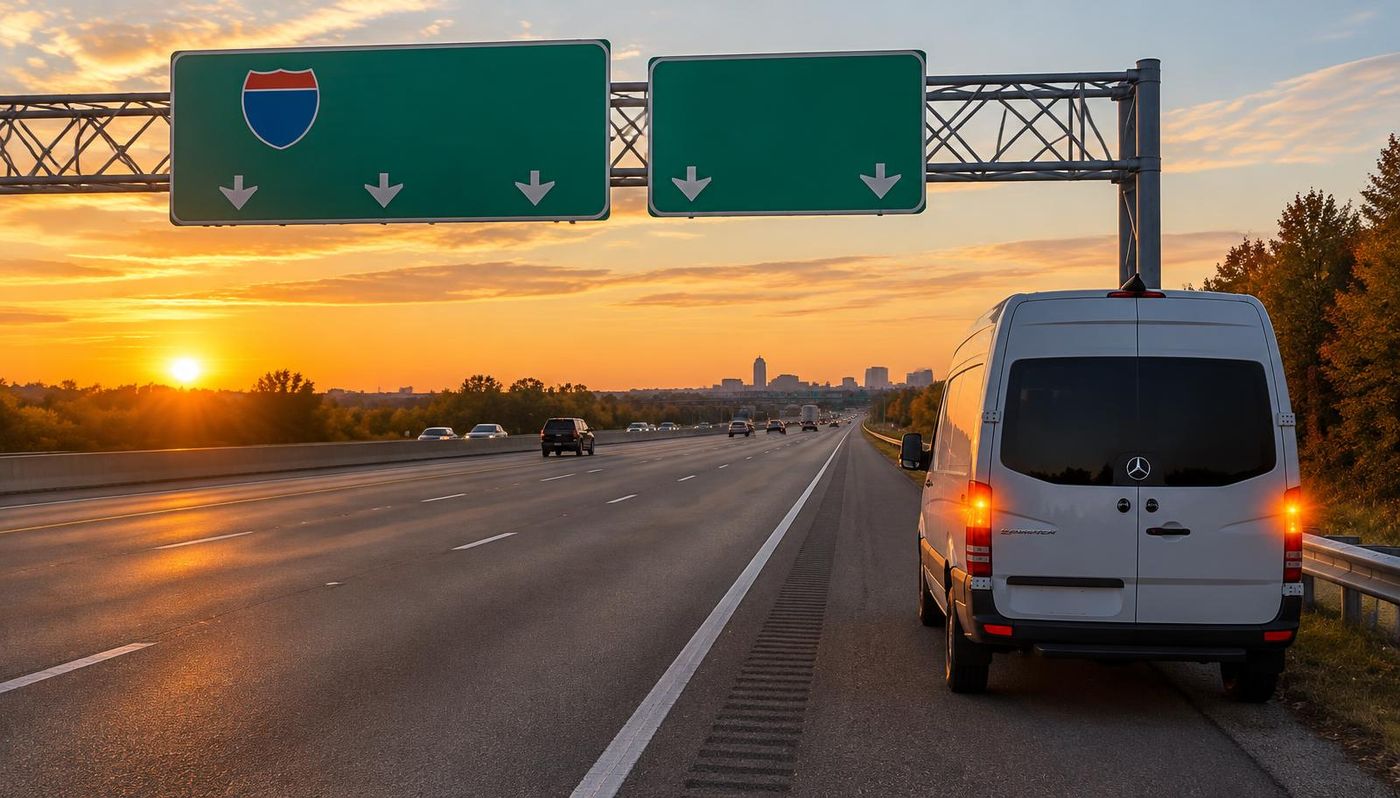
The best place to stop with a flat on US-1 is usually a side street or business lot, which gives our technician safe room to work. Around Port St. Lucie, if the vehicle can still roll slowly, a lit lot near Clover Park, the Mets spring training ballpark is safer than the shoulder of US-1. If it cannot move, steer as far right as you safely can, turn on your hazard lights and stay buckled in.
What is the Move Over law in Florida? Since January 1, 2024, it covers disabled vehicles too: drivers must move over a lane for a stopped vehicle showing hazard lights, or slow to 20 mph below the posted limit when they cannot move over. It protects you on US-1 near Port St. Lucie, but never count on it. If you must get out, use the side away from traffic, and if you broke down close to Tradition Square, tell dispatch, since that is the easiest place for the technician to find you.
If anyone is hurt, the vehicle is on fire or you are stopped in a travel lane of US-1, call 911 first. From a cell phone in Florida you can also dial *FHP (*347) to reach the Florida Highway Patrol. Then call MVP and say you are on US-1 near Port St. Lucie, close to the Port St. Lucie Botanical Gardens or the last mile marker you saw.
What we fix on the US-1 shoulder near Port St. Lucie
Our service vans carry what most US-1 calls need: flat tire repair, spare installation, new and used tire replacement, jump starts, battery replacement, lockouts, fuel delivery and winch outs. Flat tire road service is the most common call. We plug and patch a safe tread puncture, mount your spare and torque the lug nuts, or replace the tire in your size, whether the vehicle is on US-1 or parked near Clover Park, the Mets spring training ballpark.
If a vehicle cannot be fixed on site, dispatch arranges a tow from US-1 to your home in Port St. Lucie, your mechanic or the shop you choose, including shops in River Park and White City. Shops near Tradition Square often close in the evening, so confirm the destination can take the vehicle after hours.
Electric vehicles are heavier than similar gas models, so their tires work harder on US-1. We lift EVs only at the automaker's jack points and install EV rated tires. On the rural stretches of US-1 around Port St. Lucie, chargers can be far apart, so tell dispatch the charge level along with your spot near the Crosstown Parkway bridge over the North Fork.
Truck tire repair on US-1 in Port St. Lucie
I-95 and Florida's Turnpike carry freight through all three counties, SR 70 and SR 60 bring cattle, citrus and produce trucks in from the ranch country around Okeechobee and Yeehaw Junction, and the port of Fort Pierce and the warehouse parks near the interchanges keep tractor trailers moving. US-1 near Port St. Lucie carries its share of that traffic, from box trucks serving Clover Park, the Mets spring training ballpark to tractor trailers passing through. MVP provides semi truck tire repair on the shoulder of US-1, including steer, drive and trailer positions, repaired where safe or replaced on site. For semis the work is tire service only, not mechanical repairs.
Truck calls from US-1 go faster when the driver shares the unit number, the failed tire position, the size printed on the sidewall and whether the load is time sensitive. For yards and docks around Port St. Lucie, whether near the Port St. Lucie Botanical Gardens or out on I-95, give the business name, the gate and the parking row, and fleets that run US-1 every day can schedule tire checks at the yard.
Trailers on US-1 through Port St. Lucie
Boat trailers launch into the Indian River Lagoon, the St. Lucie River and the Sebastian, Fort Pierce and St. Lucie inlets from ramps in Sebastian, Vero Beach, Fort Pierce, Stuart and Port Salerno, bass boat and airboat trailers head west to the Stick Marsh and Lake Okeechobee, and campers roll in for winter stays at the beach and river campgrounds. Plenty of those trips run US-1 past Port St. Lucie, often with trailers that sat in the sun for weeks near Tradition Square or in a back pasture, and those are the tires most likely to fail at highway speed.
Salt water from lagoon and inlet ramps eats at trailer hubs, bearings and lug nuts, and trailers parked in the summer sun crack their tires long before the tread wears out. We repair and replace horse, livestock, boat, utility, cargo, camper and semi trailer tires where the rig stopped on US-1 near Port St. Lucie, or in a lot near the Crosstown Parkway bridge over the North Fork if you can roll there safely. The Merrill P. Barber, Wabasso, Fort Pierce, Jensen Beach, Ernest F. Lyons and Roosevelt bridges leave almost no room to stop, so if a trailer tire fails on a bridge, keep rolling slowly to the end of the span if you safely can.
Before you drive US-1 from Port St. Lucie
Check cold tire pressure once a month against the placard on the driver door jamb. A tire running well under its pressure builds heat fast at highway speed on US-1, and that heat is behind most of the blowouts we see. If the tire pressure light comes on, take the next safe turn off, such as a lot near Clover Park, the Mets spring training ballpark, before you look.
How long can you drive on a spare tire? A compact donut spare is built for short distances at reduced speed: most are rated for about 50 mph, and many makers suggest no more than about 50 to 70 miles before the flat is repaired or replaced. On US-1 from Port St. Lucie, that may get you home or to Tradition Square, but it is not meant for a long run toward Hutchinson Island South.
Walk around the vehicle before a long trip on US-1. Look for a tire that sits lower than the others, a nail head in the tread or a bulge in the sidewall, and check that the spare holds air and the jack is still aboard. A quick look in the driveway or at the Port St. Lucie Botanical Gardens prevents many roadside calls.
Questions drivers search about US-1 near Port St. Lucie
What should you do if you get a flat tire on the highway? Ease off the gas, keep a firm grip and steer gradually toward the shoulder or the next exit instead of braking hard. On US-1 near Port St. Lucie, a wide shoulder or a lot near Clover Park, the Mets spring training ballpark is the goal; once stopped, hazards on, seat belt on, then call.
Who do you call for a flat tire on the highway? Call MVP Mobile Tire Shop and Roadside Assistance, 24/7. We come to US-1 near Port St. Lucie with the tools and tires to finish most jobs on site, and dispatch quotes the job first, whether you are near Tradition Square or out between towns.
Should you pull off the highway for a flat tire? Get off the travel lanes as soon as it is safe, but a short, slow roll to an exit or a wider spot is better than stopping on a narrow shoulder. Around Port St. Lucie, that might mean reaching a turn off near the Port St. Lucie Botanical Gardens rather than stopping on a bridge or a curve of US-1.
How do you change a flat tire on the highway? Carefully, or not at all. Changing a tire on the traffic side of US-1 is one of the most dangerous jobs a driver can attempt. If the flat is on that side, wait for help: an MVP technician works with lighting and gear to change it, and the Port St. Lucie landmark nearest you, the Crosstown Parkway bridge over the North Fork, helps dispatch find you.
How far is Port St. Lucie from River Park? About 5 miles northeast in a straight line, and a little more by road. Both towns sit on our US-1 coverage, so if you break down between Port St. Lucie and River Park, near the Crosstown Parkway bridge over the North Fork or past it, the same dispatch line sends help.
Other highways and nearby towns for Port St. Lucie
Besides US-1, Port St. Lucie drivers use Florida's Turnpike, I-95, SR 70, SR A1A and SR 76, and each has its own Port St. Lucie page with exits, nearby towns and safety tips. The town's own main roads are I-95, Florida's Turnpike, US-1, Port St. Lucie Boulevard, St. Lucie West Boulevard, Crosstown Parkway and Gatlin Boulevard, the routes most callers near the Crosstown Parkway bridge over the North Fork use to reach US-1.
The closest towns to Port St. Lucie are River Park, about 5 miles northeast, White City, about 7 miles northeast, Indian River Estates, about 8 miles northeast and North River Shores, about 8 miles southeast. The same dispatch line covers all of them, so if you are not sure which town you are in on US-1, just share your location.
What US-1 roadside help in Port St. Lucie costs
How much does roadside assistance cost? It depends on what is wrong, the vehicle, the tire size if a tire is needed, the time of day and where on US-1 you are. A spare install on a sedan parked near Clover Park, the Mets spring training ballpark costs less than a new commercial tire on the shoulder outside Port St. Lucie at night, and dispatch explains the difference before you agree.
You get a clear quote by phone or text before a technician heads to US-1, and the price you approve is the price you pay. No tip is added, and if the job near the Port St. Lucie Botanical Gardens turns out simpler than expected, you pay less.
Save the number before you need US-1 help
The middle of a breakdown on US-1 is the wrong time to search for help. Save the dispatch line now and share it with anyone in your household who drives US-1 to Clover Park, the Mets spring training ballpark, especially before Mets spring training in February and March.
Calls and texts are answered around the clock, nights, weekends and holidays included. Call, text or book online from Port St. Lucie, and we will get you back on US-1 and on your way to Tradition Square.
Exit and road data © OpenStreetMap contributors. City locations from the U.S. Census Bureau.