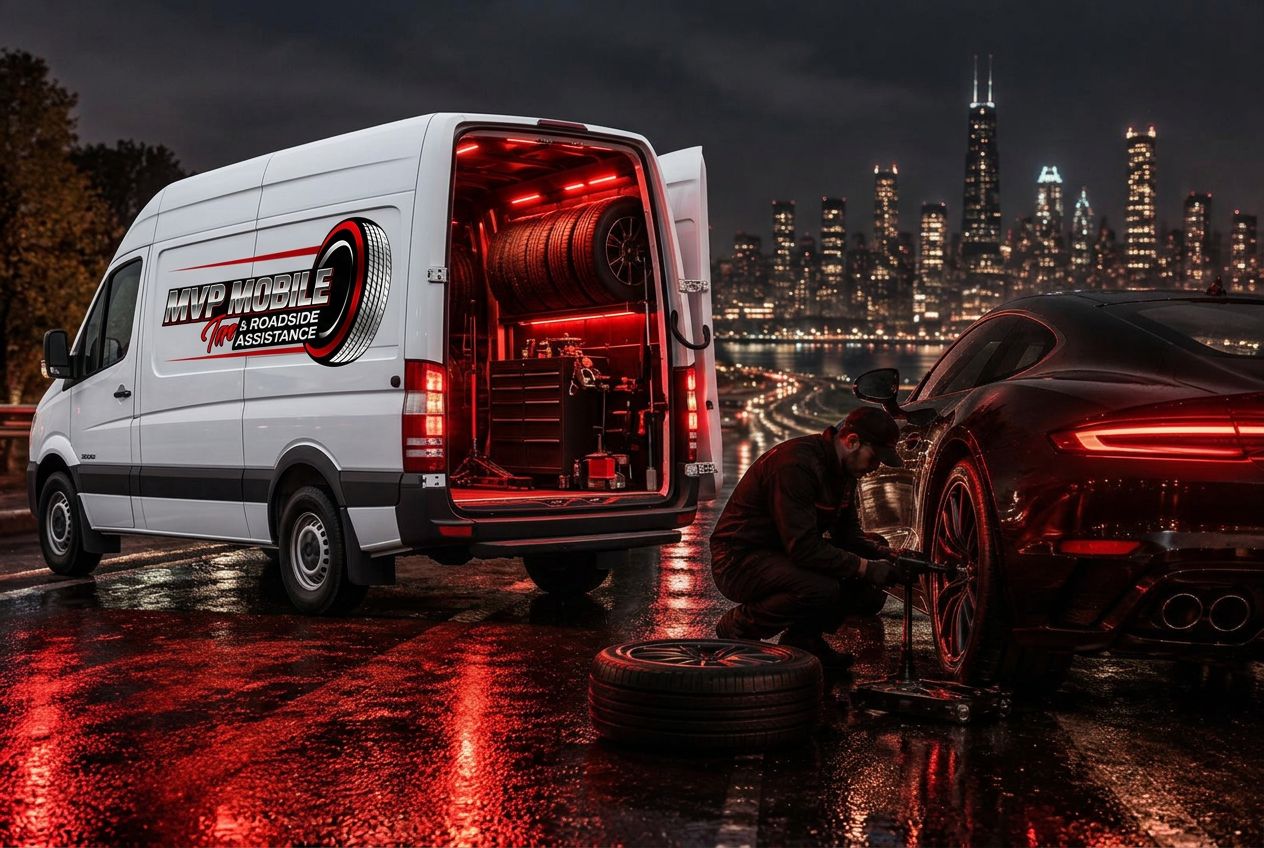
Pensacola Station drivers no longer have to limp down SR 173 past the National Naval Aviation Museum to a tire shop and wait in a lobby. MVP Mobile Tire Shop and Roadside Assistance brings the shop to the Pensacola Station community, with a technician, the tools and the tires to finish most jobs where the vehicle is parked.
Pensacola Station is the Cradle of Naval Aviation, the Navy's first air station, home of the Blue Angels, the flight schools that train Navy, Marine and Coast Guard aviators, the National Naval Aviation Museum, the Pensacola Lighthouse and the old brick forts that guarded the bay. This is bay, beach, river and farm country, with Pensacola Bay, Escambia Bay, East Bay and Santa Rosa Sound wrapped around the peninsula, the white sand of Santa Rosa Island at Pensacola Beach and Navarre Beach, the Escambia, Blackwater and Yellow rivers winding south through the pine woods of Blackwater River State Forest and peanut and cotton fields running north to the Alabama line, and our technicians cover all of it, from the Pensacola Lighthouse to the rural roads outside town.
All 26 MVP services are available in Pensacola Station, from tire repair and replacement to jump starts, lockouts, fuel delivery, towing and semi truck tire service. Each one has its own Pensacola Station page with local details and answers, and the same dispatch line reaches Fort Barrancas and the far edges of town.
Pensacola Station is the Cradle of Naval Aviation, the Navy's first air station, home of the Blue Angels, the flight schools that train Navy, Marine and Coast Guard aviators, the National Naval Aviation Museum, the Pensacola Lighthouse and the old brick forts that guarded the bay. The roads our technicians use most here are SR 292, SR 173, Navy Boulevard, Blue Angel Parkway, Radford Boulevard and Duncan Road, and the landmarks drivers mention most are the National Naval Aviation Museum, the Pensacola Lighthouse, Fort Barrancas and the main gate at the south end of Navy Boulevard.
The Pensacola Station community covers Naval Air Station Pensacola on the peninsula between Pensacola Bay and Big Lagoon, reached by the main gate at the south end of Navy Boulevard and the west gate off Blue Angel Parkway, SR 173, with Radford Boulevard and Duncan Road inside, and only people with base access can drive past the gates, so tell dispatch whether the vehicle is inside the gate or outside, and plan to meet the technician outside a gate unless the base has cleared the visit.
The road problem we hear about most in Pensacola Station: gate lines back up onto Navy Boulevard and Blue Angel Parkway at shift changes and on air show days, and the roads inside are slow, with checkpoints, student drivers and marching formations. If that is where you are, stay buckled in with the hazard lights on, or pull into the closest lot, and send your location.
Tire service in Pensacola Station includes mobile tire shop, tire shop, mobile tire repair, flat tire repair, mobile tire replacement, new tire installation, used tire installation, mobile tire installation, spare tire installation and tire rotation. Tire jobs are done on site with mounting and balancing equipment, so a damaged tire near the National Naval Aviation Museum or in a driveway off Navy Boulevard is handled without a tow.
Send the tire size from the sidewall when you call from Pensacola Station, or a photo of it by text, and dispatch confirms the right tire before the van leaves for Fort Barrancas or wherever you are parked.
Roadside help in Pensacola Station includes roadside assistance, emergency roadside assistance, roadside rescue, jump start service, battery replacement, car lockout service, fuel delivery, winch out service and towing service. Roadside calls go to the closest available technician, whether you are stranded on SR 292, stuck at the Pensacola Lighthouse or locked out in a quiet Pensacola Station neighborhood.
For roadside help in Pensacola Station, the most useful details are your direction of travel on SR 173 or Navy Boulevard, the nearest crossroad, exit or landmark such as the National Naval Aviation Museum, and the color of the vehicle.
Trucks, trailers, fleets and EVs in Pensacola Station includes semi truck tire repair, commercial tire repair, box truck tire repair, trailer tire repair, fleet tire service, ev tire & roadside assistance and mobile oil change. Commercial and specialty calls cover the work vehicles of Pensacola Station, sailors' and student aviators' cars, families' SUVs, museum visitors' cars, contractors' trucks and moving trucks. For semis the work is tire service only, not mechanical repairs.
Fleet and commercial customers in Pensacola Station can schedule work at the yard after hours, so vehicles that run SR 292 past the National Naval Aviation Museum every day are ready when the crew arrives in the morning.
Good places to wait for roadside help in Pensacola Station include the National Naval Aviation Museum, the Pensacola Lighthouse, Fort Barrancas and the main gate at the south end of Navy Boulevard, a store or office lot off SR 173, or your own driveway. Pick a spot with firm, level ground, room beside the vehicle and enough light to work, and tell dispatch the entrance, row or building number.
If the vehicle is on SR 292 or another busy road around Pensacola Station and can still roll slowly, moving to a lot such as one near Fort Barrancas is usually safer than waiting on the shoulder for roadside help. If it cannot move, stay put with the hazard lights on and let dispatch know.
The same Pensacola service area team that handles roadside help in Pensacola Station also covers Warrington, about 3 miles northeast, Myrtle Grove, about 4 miles north, West Pensacola, about 6 miles northeast and Bellview, about 8 miles north. If something goes wrong while you are driving between them, the same dispatch line answers.
Warrington is the closest neighbor, about 3 miles northeast, and SR 292 connects the two. For roadside help out of town, tell dispatch which town you were closer to, and the technician routes from the right side.
For drivers coming in for roadside help: from Warrington, about 3 miles away, Pensacola Station is to the southwest by way of SR 292; from Myrtle Grove, about 4 miles away, Pensacola Station is to the south by way of SR 173; from West Pensacola, about 6 miles away, Pensacola Station is to the southwest by way of SR 292; from Bellview, about 8 miles away, Pensacola Station is to the south by way of SR 173.
Escambia County is the westernmost county in Florida, running from Pensacola Beach and Perdido Key on the Gulf through Pensacola, its Navy bases and its west and north side suburbs to the paper and chemical plants of Cantonment and the farm and timber towns of Molino and Century on the Alabama line, all on Central time, and Pensacola is the county seat. I-10 crosses the county east and west on the north side of Pensacola, I-110 runs south from I-10 into downtown, US-29 runs north from downtown through Ensley, Cantonment and Molino to Century, US-90 follows Mobile Highway west toward Alabama and Scenic Highway east along Escambia Bay, US-98 crosses the Pensacola Bay Bridge and runs west past the air station, and Navy Boulevard, Blue Angel Parkway and Gulf Beach Highway lead to the bases and Perdido Key. For roadside help in Pensacola Station, those are the routes our technicians use to reach you, along with SR 292, SR 173 and Radford Boulevard, the roads closest to the Pensacola Lighthouse.
One thing to know before you call for roadside help: the Pensacola Bay Bridge and the I-10 bridges over Escambia Bay carry most trips east with little room to stop, the air station gates back up at shift changes, and the north end has long stretches of US-29 and the county roads with few stores. Closer to home, gate lines back up onto Navy Boulevard and Blue Angel Parkway at shift changes and on air show days, and the roads inside are slow, with checkpoints, student drivers and marching formations.
Summers at the western end of the Panhandle are hot and sticky, with thunderstorms rolling in off the Gulf and the bays most afternoons from June into September and some of the heaviest rain totals in Florida, while winter cold fronts from Alabama bring frosty mornings to the farm country around Jay and Century and drop tire pressure overnight, and the salt air on the peninsula and the beaches works on wheels and battery terminals all year. In Pensacola Station, that means tire pressure swings, faster battery wear and standing water on SR 173 and in the lots near the Pensacola Lighthouse after a storm, all common reasons for tire service.
Hurricane season runs from June through November, and Ivan in 2004 broke apart the I-10 bridges over Escambia Bay, Dennis followed in 2005, and Sally in 2020 dumped more than two feet of rain in places around Pensacola and sent loose construction barges into the Pensacola Bay Bridge, closing it for months, while evacuation traffic heads north on US-29, SR 87 and SR 89 toward Alabama. The busiest times on Pensacola Station roads are weekday shift changes, flight school graduations, Blue Angels practice days, the Blue Angels Homecoming Air Show in November and hurricane season, when the base orders evacuations, so save the number for tire service before those weeks arrive.
Check cold tire pressure once a month against the placard on the driver door jamb. Pressure moves about one PSI for every ten degrees of temperature change, so the warning light often comes on after the first cool morning of fall in Pensacola Station, and summer heat on SR 292 and in the open lots near the Pensacola Lighthouse raises it again.
Look at the tread and sidewalls when you wash the car. In Pensacola Station, gate lines back up onto Navy Boulevard and Blue Angel Parkway at shift changes and on air show days, and the roads inside are slow, with checkpoints, student drivers and marching formations, so nails, cuts and slow leaks are common, and catching them early usually means a repair instead of a new tire.
The highways that matter most for Pensacola Station drivers are SR 292, and the town's own main roads are SR 292, SR 173, Navy Boulevard, Blue Angel Parkway, Radford Boulevard and Duncan Road, the routes most callers near Fort Barrancas use. Each highway has a page with where it runs, what it connects and what to do if you stop on it.
I-10 carries freight across both counties between Mobile, Pensacola and Tallahassee over the Escambia Bay bridges, US-29 brings tractor trailers and tankers between I-10, the Cantonment plants and Alabama, and log trucks, farm trucks and building supply rigs run SR 87, SR 89 and SR 4 through the north end. If you break down on SR 292 or another highway near Pensacola Station, or close to Fort Barrancas, move as far onto the shoulder as you safely can, keep your seat belt on when traffic is close and send your location so dispatch can route the closest technician.
Boat trailers launch into Pensacola Bay, Bayou Texar, Big Lagoon, Escambia Bay and Santa Rosa Sound from ramps in Pensacola, Gulf Breeze, Navarre and Milton, campers and fifth wheels head for the Big Lagoon and Fort Pickens campgrounds and the RV parks along US-98, and canoe and tubing trailers pack the Blackwater River landings every summer weekend. From Pensacola Station, those trips usually start on SR 292 or SR 173, often from a driveway, a farm or a lot near Fort Barrancas, and trailer tires that sat in the sun are the ones most likely to fail on the way.
Roofing, framing, pool and landscape trailers work the new subdivisions from Pace and East Milton to Navarre, moving companies pull cargo trailers in and out of the air station, Corry Station and Whiting Field, and log and farm trailers run the north end around Jay and Century. In Pensacola Station, MVP repairs and replaces horse, livestock, boat, utility, cargo, camper and semi trailer tires where the rig stopped, including lots near the Pensacola Lighthouse.
What does roadside assistance cover in Pensacola Station? Roadside assistance covers the problems that strand a driver: flat tires and spare installs, jump starts and battery replacement, lockouts, fuel delivery, winch outs and towing when the vehicle cannot be fixed on site. In Pensacola Station, MVP handles all of them from one dispatch line, including roadside help, whether you are near the National Naval Aviation Museum or out on SR 292.
Does roadside assistance count as an insurance claim? Calling MVP directly is a paid service between you and MVP, not an insurance claim. If you use a roadside plan through your auto insurer instead, how the insurer records the call depends on the policy, so ask the insurer. Many drivers stuck on SR 173 or near the Pensacola Lighthouse in Pensacola Station simply call MVP for roadside help and keep their policy out of it.
Are tire shops open on Sunday near Pensacola Station? Plenty of tire shops along SR 173 and around the Pensacola Lighthouse keep short weekend hours or close on Sundays and holidays. MVP dispatches roadside help every day of the week, 24 hours a day, so a Sunday flat in Pensacola Station gets the same answer as a Tuesday flat: call, get a quote and a technician heads your way.
Can you drive on a flat tire? Only far enough to reach a safe place to stop, and slowly. A tire driven flat crushes its own sidewall within a short distance, which turns a cheap repair into a replacement and can bend the wheel. On SR 292 near Pensacola Station, that usually means the next exit, a wide shoulder or a parking lot near the Pensacola Lighthouse, then call for roadside help.
Can you jump start a car without another car? Yes, with a charged portable jump starter pack, which clamps on the same way as cables. That is what MVP technicians use for roadside help, so there is no need to find a second car on SR 173, in a lot near Fort Barrancas or in a quiet Pensacola Station neighborhood at night.
How much does a tow truck cost in Pensacola Station? A tow price depends on the distance, the vehicle, the type of truck needed, the time of day and where the vehicle is sitting. A short tow inside Pensacola Station, say from the Pensacola Lighthouse, costs less than a long run up SR 292 at night, and MVP quotes the total for roadside help before the truck heads out.
Around Pensacola Station, the vehicles on the road are mostly sailors' and student aviators' cars, families' SUVs, museum visitors' cars, contractors' trucks and moving trucks. Each gets the right lifting equipment, from low profile sedans to dually pickups and loaded trailers.
Our car make, model and tire size guides list factory sizes, tire notes and pressure guidance for the vehicles Pensacola Station drivers bring us. Use the links on this page to find your make or tire size, then call or text dispatch from the National Naval Aviation Museum or anywhere else in town.
Prices depend on the service, the vehicle, the tire size if a tire is needed, the time of day and where you are, whether that is in Pensacola Station near Fort Barrancas or out on SR 292. Dispatch quotes the total before anyone heads out, and that is the price you pay.
Call, text or tap Book Now. Share your location in Pensacola Station, such as a lot near the Pensacola Lighthouse or an address off Navy Boulevard, the vehicle year, make, model and color, the tire size if a tire is involved, and whether you need help now or want to schedule. Dispatch gives you a quote and an arrival estimate before a technician heads to you.
Put the number in your phone today; the middle of a breakdown on SR 292 or near the National Naval Aviation Museum is the wrong time to search for help.