Roadside Assistance in Charleston, SC: we come to you
Need roadside assistance in Charleston? MVP Mobile Tire Shop and Roadside Assistance sends a technician to you anywhere in the city of Charleston, Charleston County, whether the vehicle is parked at home, at work, near the Charleston City Market or on the shoulder of I-26. There is no tow to a shop and no waiting room, just the work done where you are.
Open now, 24 hours, 7 days a week in Charleston. Roadside Assistance is dispatched by a live person at every hour, nights, weekends and holidays included, so a problem on US-17 at 2 a.m. gets the same answer as one at noon near Waterfront Park and the Pineapple Fountain.
Flat tires, dead batteries and breakdowns handled where you stopped. In Charleston, MVP brings roadside assistance to wherever the vehicle sits, from Hampton Park to the side streets off US-17.
Looking for road service near you in Charleston? MVP is 24/7 emergency roadside service with no membership needed, so you only pay for the help you actually use. Around Charleston, that covers Hampton Park, I-526 and every neighborhood in between.
Charleston is South Carolina's oldest and largest city, with church steeples, the Battery and King Street shopping on the historic peninsula, the Medical University and the College of Charleston downtown, and neighborhoods spreading across West Ashley, James Island, Johns Island and Daniel Island. That mix shapes roadside assistance here: the technician arrives with the equipment for the vehicles we see most around Charleston, hotel shuttles, carriage company trucks, hospital staff cars at MUSC and Roper, tour buses and rideshare drivers.
Roadside Assistance on Charleston streets and highways
MVP handles roadside assistance in Charleston, Charleston County. Our Charleston technicians drive I-26, US-17, I-526, SC-61, SC-30, Meeting Street, King Street, East Bay Street, Calhoun Street and Maybank Highway every week and know the ground around the Charleston City Market, Waterfront Park and the Pineapple Fountain, Hampton Park and the Medical University of South Carolina campus, so naming the closest of those when you call gets help moving sooner.
Charleston's peninsula narrows between the Ashley and Cooper rivers, with I-26 ending into Meeting Street and King Street, US-17 crossing the Ashley River bridges as the Crosstown toward West Ashley and SC-30 linking James Island, while West Ashley, James Island, Johns Island and Daniel Island all sit across the water, so tell dispatch which side of which river you are on and the nearest cross street rather than just saying Charleston. For roadside assistance, also tell dispatch if the vehicle is at a downtown garage, a hospital deck, an airport lot, a side street or a highway shoulder.
Roadside calls in Charleston are mostly the everyday kind: a soft tire on I-26, a battery that quit near Waterfront Park and the Pineapple Fountain, keys locked inside at one of the downtown garages, the hospital decks around MUSC, the airport garage, the coliseum lots and the outlet lots and an empty tank on I-526 over the rivers late at night and the dark industrial roads around the old Navy Base. A good place to meet the technician here is the Charleston City Market.
What roadside assistance includes in Charleston
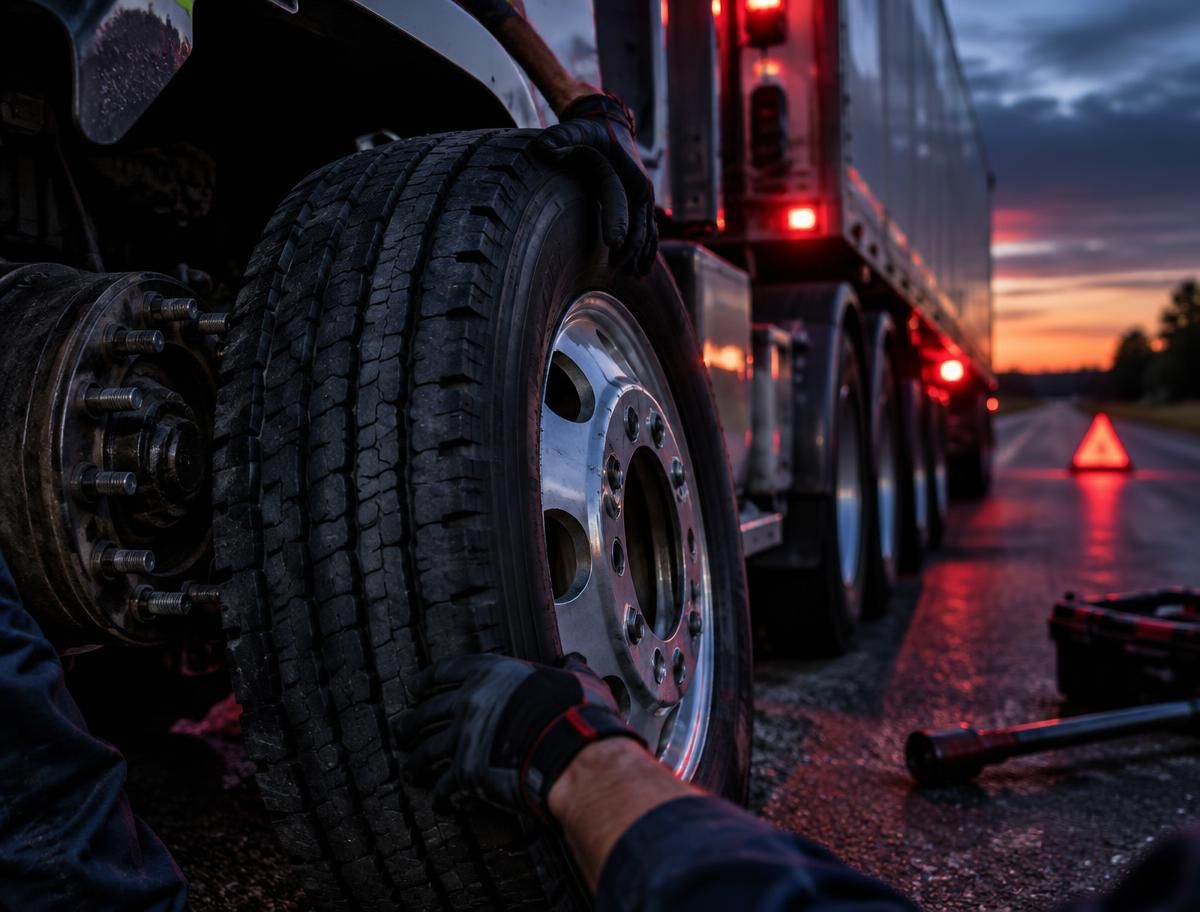
Roadside assistance covers the common problems that strand a driver: flat tires, spare installs, dead batteries, lockouts, fuel delivery, winch outs and towing when the vehicle cannot be fixed where it sits. In Charleston, the van can do that work in a driveway, at a job site or in a lot near the Charleston City Market, as long as there is safe, reasonably level ground beside the vehicle.
Call when the vehicle will not start, a tire is flat, the keys are locked inside or the tank is empty. Drivers in Charleston tend to call about it from Waterfront Park and the Pineapple Fountain or from the shoulder of I-526.
Roadside calls usually start with a flat, a dead battery, keys left inside, a fuel gauge that misread or a soft shoulder that grabbed a wheel. In Charleston, add the local wear and tear: king tides and summer downpours flood the Crosstown, the Market area and the low peninsula streets within minutes, narrow one way streets and carriage routes leave no room to pull over, and salt water left on the pavement eats at wheels and brake parts. That is the background to most roadside assistance calls we get here.
Questions Charleston drivers search about roadside assistance
What does roadside assistance cover in Charleston? Roadside assistance covers the problems that strand a driver: flat tires and spare installs, jump starts and battery replacement, lockouts, fuel delivery, winch outs and towing when the vehicle cannot be fixed on site. In Charleston, MVP handles all of them from one dispatch line, including roadside assistance, whether you are near the Charleston City Market or out on I-26.
Does roadside assistance count as an insurance claim? Calling MVP directly is a paid service between you and MVP, not an insurance claim. If you use a roadside plan through your auto insurer instead, how the insurer records the call depends on the policy, so ask the insurer. Many drivers stuck on US-17 or near Waterfront Park and the Pineapple Fountain in Charleston simply call MVP for roadside assistance and keep their policy out of it.
Does roadside assistance cover towing? With MVP, yes: when roadside assistance cannot get the vehicle moving safely, dispatch can arrange a tow to your home, your mechanic or the shop you choose. Roadside plans sold by insurers and clubs differ in how many miles they tow, which matters on long runs like I-26 out of Charleston or from Waterfront Park and the Pineapple Fountain to a shop across the county.
Do you tip roadside assistance? No tip is added to your bill. The price dispatch quotes for roadside assistance in Charleston is the price you pay, and anything beyond that is entirely up to you. What helps the technician most is a safe spot to work, like a lot near Hampton Park, and clear directions.
How booking roadside assistance works in Charleston
Call, text or tap Book Now and tell dispatch what happened, the vehicle year, make, model and color, and where you are in Charleston, for example near Waterfront Park and the Pineapple Fountain or on I-26. Have the vehicle year, make, model and color, a short description of the problem and your exact location.
Dispatch gives you a firm quote and an honest arrival estimate for roadside assistance before a technician heads out, based on where you are, traffic around the Charleston City Market and who is closest. The price you approve is the price you pay.
When the technician reaches you, whether that is at Waterfront Park and the Pineapple Fountain or a driveway off I-526, they confirm the roadside assistance job, complete it and check your other tires before leaving, so you drive away knowing the whole vehicle is ready.
Mobile roadside assistance compared with a shop or a tow in Charleston
Most roadside problems do not need a tow. A flat, a dead battery, a lockout or an empty tank can be handled on site, and towing is the backup when the vehicle cannot be made safe to drive. For drivers in Charleston, the nearest shop may be a drive down US-17 from the Charleston City Market, so roadside assistance at the vehicle saves that trip.
On every roadside visit the technician looks over the tires and checks their pressure, and when the battery was involved, tests it and the charging system. That courtesy check is part of every roadside assistance visit in Charleston, whether the vehicle is parked near Hampton Park or at home.
A roadside assistance checklist for Charleston drivers
Save the dispatch number in your phone and in your family's phones. Keep a phone charger, water and a flashlight in the car. Know your vehicle's color and plate, since dispatch will ask. Those habits matter around Charleston, where king tides and summer downpours flood the Crosstown, the Market area and the low peninsula streets within minutes, narrow one way streets and carriage routes leave no room to pull over, and salt water left on the pavement eats at wheels and brake parts.
If the technician spotted another issue, like a worn tire or a weak battery, plan that fix before the next long drive. If you are back on I-26 soon after roadside assistance, a quick look at the tires before you leave Waterfront Park and the Pineapple Fountain or your driveway in Charleston is worth the minute.
Where to meet the technician in Charleston
Good places to wait for roadside assistance in Charleston include the Charleston City Market, Waterfront Park and the Pineapple Fountain, Hampton Park and the Medical University of South Carolina campus, a store or office lot off US-17, or your own driveway. Pick a spot with firm, level ground, room beside the vehicle and enough light to work, and tell dispatch the entrance, row or building number.
If the vehicle is on I-26 or another busy road around Charleston and can still roll slowly, moving to a lot such as one near Hampton Park is usually safer than waiting on the shoulder for roadside assistance. If it cannot move, stay put with the hazard lights on and let dispatch know.
Towns near Charleston we reach for roadside assistance
The same Charleston and the Lowcountry service area team that handles roadside assistance in Charleston also covers Mount Pleasant, about 6 miles east, North Charleston, about 8 miles northwest, Summerville, about 17 miles northwest and Hilton Head Island, about 63 miles southwest. If something goes wrong while you are driving between them, the same dispatch line answers.
Mount Pleasant is the closest neighbor, about 6 miles east, and US-17 connects the two. If you need roadside assistance between Charleston and Mount Pleasant, the mile marker or nearest crossroad helps most.
For drivers coming in for roadside assistance: from Mount Pleasant, about 6 miles away, Charleston is to the west by way of US-17; from North Charleston, about 8 miles away, Charleston is to the southeast by way of I-26; from Summerville, about 17 miles away, Charleston is to the southeast by way of I-26; from Hilton Head Island, about 63 miles away, Charleston is to the northeast.
Charleston County roads and roadside assistance
Charleston County is the coastal county around the harbor, with Charleston, North Charleston and Mount Pleasant close in and sea islands such as James, Johns, Folly and Edisto spreading along the coast, and Charleston is the county seat. I-26 runs from the peninsula up through North Charleston, I-526, the Mark Clark Expressway, curves from West Ashley to Mount Pleasant, US-17 crosses the county along the coast and SC-61 and SC-30 serve West Ashley and James Island. For roadside assistance in Charleston, those are the routes our technicians use to reach you, along with Meeting Street, King Street and East Bay Street, the roads closest to Waterfront Park and the Pineapple Fountain.
One thing to know before you call for roadside assistance: the Ravenel Bridge and the I-526 bridges have no room to stop, and the low streets downtown and on the islands flood at high tide. Closer to home, king tides and summer downpours flood the Crosstown, the Market area and the low peninsula streets within minutes, narrow one way streets and carriage routes leave no room to pull over, and salt water left on the pavement eats at wheels and brake parts.
Weather, seasons and roadside assistance in Charleston
Summers in the Lowcountry are long, hot and humid, with afternoon thunderstorms most days from June to September, and winters are mild and damp with only rare ice, so heat and humidity do the damage here, shortening battery life, baking tires parked in the sun and making wet roads slick after every storm. In Charleston, that means tire pressure swings, faster battery wear and standing water on US-17 and in the lots near Waterfront Park and the Pineapple Fountain after a storm, all common reasons for roadside assistance.
Hugo struck Charleston in 1989, Matthew and Irma flooded the peninsula and the barrier islands in 2016 and 2017, and king tides and summer downpours now flood the low streets of Charleston and the causeways to the islands many times a year. The busiest times on Charleston roads are spring brings the Cooper River Bridge Run and Spoleto Festival USA, summer is peak visitor and hurricane season at once, and fall weekends and the holidays pack King Street, the hotels and the downtown garages, so save the number for roadside assistance before those weeks arrive.
Vehicles we see in Charleston
Around Charleston, the vehicles on the road are mostly hotel shuttles, carriage company trucks, hospital staff cars at MUSC and Roper, tour buses and rideshare drivers. This is marsh, river and beach country, with the Ashley and Cooper rivers, Folly Beach, Sullivan's Island and Isle of Palms, the shrimp docks of Shem Creek, the May River at Bluffton and the beaches, golf courses and bike paths of Hilton Head Island, so roadside assistance calls here range from a sedan in a lot near the Charleston City Market to a pickup on I-526.
The Port of Charleston is one of the busiest container ports on the East Coast, so I-26 and I-526 carry a steady stream of container chassis and drayage trucks to the terminals, the Boeing campus and the warehouses around North Charleston and Summerville, while US-278 carries supply trucks to Hilton Head. For roadside assistance in Charleston, passenger cars, SUVs, pickups, EVs, box trucks and semi trucks parked anywhere from Waterfront Park and the Pineapple Fountain to I-26 all get the right lifting equipment, and for semis the work is tire service only, not mechanical repairs.
What affects the cost of roadside assistance in Charleston
The price of roadside assistance depends on the work needed, the vehicle, the tire size if a tire is involved, new or used parts, the time of day and where you are, whether that is in town near Waterfront Park and the Pineapple Fountain or out on I-26.
Dispatch quotes the roadside assistance total by phone or text before a technician heads out, and the number you approve is the number you pay. If the job near Hampton Park turns out simpler than expected, you pay less, and if it cannot be done, you do not pay for parts you did not get.
Staying safe while you wait in Charleston
If you are waiting for roadside assistance on I-26 or another fast road around Charleston, turn on your hazard lights, stay buckled in when traffic is close and never stand between the vehicle and moving cars. Call 911 first if anyone is hurt or a lane is blocked. Keep in mind that king tides and summer downpours flood the Crosstown, the Market area and the low peninsula streets within minutes, narrow one way streets and carriage routes leave no room to pull over, and salt water left on the pavement eats at wheels and brake parts.
If you can still roll slowly, a parking lot near Hampton Park is a safer place to wait for roadside assistance than the shoulder. Keep your phone charged and nearby so the technician can reach you on arrival.
Car makes, tire sizes and highways for Charleston
Our car make, model and tire size guides cover the vehicles Charleston drivers bring us, with factory sizes, tire notes and pressure guidance. Pick your make or tire size from the links on this page, then call or text dispatch from the Charleston City Market or anywhere in Charleston for roadside assistance. Highway pages for I-26, I-526 and US-17 explain where each road runs, its busiest stretches and what to do if you stop on it.
Why Charleston drivers call MVP for roadside assistance
MVP is built around coming to you. For roadside assistance, dispatch answers 24/7, quotes before anyone heads out, and sends a technician who knows I-26, US-17 and the way to the Charleston City Market.
Save the number before you need it, and share it with anyone in your household who drives I-26 or parks near Waterfront Park and the Pineapple Fountain. Call, text or book online for roadside assistance in Charleston and the rest of Charleston County.